
Phoenix Blog
Musings on teen emotions and mental health, the role of parent/carer support, and the role of Occupational Therapy
'Risk' in mental health
What do we mean when we talk about risk?
What is it and what affects it?
Risk is the possibility of something happening that we don't want to happen.
When talking about teenage mental health, we are often talking about the risk of harm, usually the risk of harm to themselves.
And we might be talking about deliberate self-harm, or even the risk that they will want to or seek to end their own lives.
This is such an emotive topic and several words I've used here bring up all sorts of uncomfortable and panicked feelings in people, I know.
But this is where understanding the topic we're talking about can bring assurance and empowerment.
The other side of risk is what we call 'protective factors'. These aren't reasons to think young people are 100% safe and we don't need to worry about the risk anymore, but they are very important pieces of information about the young person's strengths, skills, insight and support networks, that help us to manage those risks and strengthen their safety nets.
Risk is also what we call 'dynamic' - someone doesn't just stay at one 'risk level' like it's an identity. Their risk level changes depending on, to name a few:
- how they feel that day
- their basic needs (water, sleep, food)
- how they're treated by others
- their mindset (motivation, drive)
- whether they've done something of purpose that day
- their physical health
- how they're spending their time
Examples of things that might increase risk:
- an event that's made them upset, angry
- feeling disconnected
- physical health again - pain, lethargy, menstruation (this can be hugely impactful for girls, especially autistic girls)
- the pressure of 'being well' or having abstained from self-harm and this being praised
- unhelpful content or contact on social media
And some examples of protective factors we can be more aware of and build upon to strengthen what's already in place:
- trusted, available adults they can talk to (not just parents or carers but wider family, family friends, adults in education, professionals)
- their insight into how they feel
- positive, helpful strategies they already use
- friends
- opportunities to get out of the house
- opportunities for things to engage in when at home that bring a sense of purpose and drive (and pull them away from their phones)
Don't be scared to think about risk to better resource yourself.
If you're talking to your young person about this, you might want to focus on talking about their safety and how that can be supported.
We tend to focus more on the things that scare us, but we don't want to be communicating to young people that everything about mental health is to do with risk and harm and a lack of safety. There's a lot to already use and build upon, we sometimes just have to train ourselves to see it.
Click the pink button at the top of this page to learn how to access more information on this.
Should teens just be more resilient?
Or is there more to it?
How much does what’s happening around a young person, and how they’re supported, really affect how they manage their own emotions? Their mental health is their mental health, right? If they can’t manage their emotions, that’s for them to work on and sort out, surely?
In my last post, I honed in on anxiety—whether experienced by a teen or adult—and some of the factors individuals can influence to affect their own experience of anxiety. But for this post, I want to zoom out and talk about mental health more broadly, how it connects to emotional regulation (and dysregulation), and the external factors that significantly shape these states for young people.
Mental Health: A Neutral Term
The phrase "mental health" can trigger feelings of concern for some people, but it’s simply a neutral term. Everyone has mental health, just as everyone has physical health. Both exist on a sliding scale and fluctuate day-to-day, depending on internal and external influences. Good mental health supports better emotional regulation—the ability to understand emotions, recognise needs, and stay in control of reactions rather than letting emotions take the wheel.
In my audio series on teen anxiety, I cover practical ways to support your teen's emotional literacy to help them build these skills.
The Building Blocks of Good Mental Health
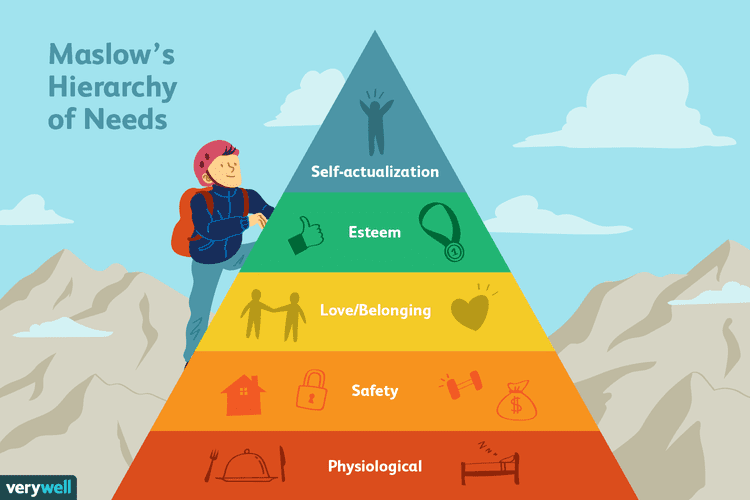
A helpful framework here is Maslow’s Hierarchy of Needs. This model illustrates the essential areas we need to thrive, starting with the most fundamental needs. Let’s apply it to mental health:
Basic Physiological Needs
Water: Is there easy access to water throughout the day? Do they drink enough?
Food: Do they get regular, balanced meals?
Rest: Is their sleep consistent and sufficient? Do they have periods of rest in their day / week?
Clothing: Are clothes appropriate for the weather and comfortable?
Safety and Security
Physical Safety: Do they have secure housing and access to healthcare? Are there any worries around housing, quality of housing, or money?
Psychological Safety: Do they feel safe expressing themselves at home or school/college? Are there consistent, supportive adults they can rely on?
Belonging and Connection
Identity: How do they feel about themselves? Are they building a self-identity? Have they found their 'tribe'?
Relationships: Do they feel connected to friends, family, or community groups?
Social Environment: Is there a space where they feel accepted and understood?
Esteem and Achievement
Opportunities for Growth: Are there activities that foster their sense of competence?
Positive Feedback: Do they hear affirming messages about their strengths?
Self-Actualization
Exploration of Interests: Do they have room to explore hobbies and passions? Do they do anything they get absorbed in? Do they experience 'flow' in activities?
Emotional Growth: Are they supported in reflecting on and learning from experiences?
As a parent or carer, bringing the focus away from their skills and behaviour directly, and seeing everything that is around and supporting them, can help to see things you and they haven't identified before, especially when things seem stuck.

First - back to basics
So for blog post no.1, I thought I'd talk on a topic I talk about quite a lot (anxiety), but elaborate on a recent series I put out on Instagram, detailing the kinds of things that AFFECT anxiety.
It happens to us and it happens to young people (the client group I generally work with). Understanding how anxiety affects both us and them is important to supporting our teens with mental health and specifically anxiety.
Quite often we can see anxiety as this horrible thing happening to us, this other 'thing' that we have no control or influence over.
But that's not quite right.
Anxiety is a state. Similar to stress, panic and fear.
And because it is a state (that has both physiological effects - the experience in our body - and psychological effects - the experience in our minds), there are things that influence whether we are more or less likely to have anxiety than our friend, AND things that we can DO that dial up or dial down that experience of anxiety.
Anxiety is, also, a state that our bodies have MEANT to bring about. In a way, it's a healthy response. But because our body is using the wrong tool to try and help us deal with the challenges in our lives, it becomes unhelpful and, sometimes, unhealthy.
What I'm referring to is the fight, flight, freeze response. Specifically the right state for when we are in danger, and need to change how we're behaving in order to fight a danger, run away from a danger, or freeze until a danger has passed.
Unfortunately this same system is triggered when we have a difficult conversation we know has to happen, or when there's a deadline that we don't know if we'll meet, or, we simply receive an email or a text.
Some people have diagnosed or diagnosable anxiety disorders. Many, many of us, however, will experience 'anxiety' without having a disorder. Anxiety is a part of many of our lives nowadays.
So I want to focus this post on practical steps, how does what we DO affect how we experience anxiety?
Let's start with the positive, the DOs. These are the things that help with the experience of anxiety, whether it is helping to calm the effects of anxiety in our brain and bodies, or targeting the anxiety at its root:
Self-care inventory
Those things we hear about a lot, probably so much that they've become background noise and not something we particularly put much thought or energy into anymore and dismiss. But if you had to rate how much of these you engage with out of 5 (0/5 = I don't engage at all in this! 5/5 = I engage extremely well with this), what would your ratings be?:
1. Getting enough sleep (do you know how much sleep you need?) - included in this could be bedtime routines
2. Drinking enough water
3. Having variation in your diet, getting a range of macronutrients (protein, carbohydrates, fats, etc), and eating multiple vegetables and fruits daily
4. Getting outside
5. Moving your body - whether through exercise, going for walks, weight-lifting at the gym or through sport
6. Surrounding yourself with people who make you feel good - this can also be extended to the things you listen to, the things you watch, the things that are coming into your conscious experience
And what about some of the DON'Ts, or rather, the 'Have You Considered Cutting Down On/Getting Help With...':
Unhelpful Characters
1. How would you describe your alcohol use?
2. Are there other substances in the mix too?
3. Is there a distressing memory, event, or events in your past that you didn't get support with and/or still cloud your thoughts from time to time?
4. Scrolling! Do you know the point where scrolling / being on social media goes from "I'm enjoying this" to "This is starting to drain my mood but I can't stop"?
5. Choosing passive, isolating activities (social media as above, TV, computer games) when choosing active, social activities would be better for your mood
6. Ignoring your anxiety, avoiding the places or situations that bring the anxiety up rather than working on a way to manage or overcome the barriers it's been putting up.
I'd love to invite you to take a look through these, take some time to reflect on the state of each of these in your life at the moment, and if there's one that stands out to you that you'd like to make a change in, fantastic. Start small - achievable, realistic steps are the best for long-standing change, rather than aiming to totally overhaul your whole lifestyle.
There are free resources, web pages, videos and charities all accessible online which support people to make the changes in their lives they want to make for better mental health.
If you are looking for more targeted support for yourself or your teen, either online or in Norfolk, have a look through the Overcoming Anxiety program tab, or get in touch to talk about what additional support through Phoenix might look like.